Predictingsilicascale
As mentioned above, the formation of silica scale can be described as a function of
temperature and pH. These two physical measures are basic parameters of reservoir
and scale simulation programmes. In the case of alkaline flooding, a chemical
enhanced oil recovery method, the movement of a pH bank can be simulated and,
consequently, the silica scale challenge can be predicted for each production well
(Figure 6). In the same manner, the temperature ‘flow’ through a reservoir can be
simulated in the case of steam floods.
Clariant Oil Services has partnered with oil companies around the world to
predict silica scaling severity in producer wells for steam and alkaline floods using
state-of-the-art reservoir simulation techniques. The combination of reservoir
simulation with scale formation models can be effective in quantifying the scale
challenge ahead of time and developing an effective scale mitigation strategy.
A concrete scaling window can be forecast for each production well and scale
prevention via continuous downhole silica scale inhibitor injection can be deployed
before a production well fails due to a downhole tubular blockage.
Novel processesandtechnologieshelpprevent silicascale
To mitigate the silica scale challenges in a given field, extensive laboratory and
field evaluation needs should ideally be completed in parallel with the reservoir
simulation. Clariant Oil Services’ LIBERATE® and SCALETREAT® silica scale inhibitors
and dispersants are custom-designed for each steam-, alkaline-, alkaline-polymer
or alkaline-surfactant-polymer flood and are tailored to perform at a high pH. New
chemical strategies offer a true step-change in performance compared to existing silica
scale prevention programmes.
One of the most commonly used approaches to preventing silica scale is the
use of low molecular weight polymeric dispersants. In order to custom-design
higher performance chemistries, several existing chemistries were evaluated
in a best-in-class, rapid screening technique to systematically appraise current
technologies in the market. From this test, one is able to develop a detailed
understanding of the structure-performance relationships of each compound and
synergistic formulations. Synergistic blends demonstrate a real performance boost by
improving the delivery mechanism of the dispersant to the specific place it needs to
be most effective. LIBERATE and SCALETREAT silica scale inhibitor blends consist of
surfactants, chelating agents, pH-modifiers, and polymeric dispersants.
This initially sounds like an overly complex cocktail of chemistries; however, they
are all present for a specific function:
Ì
Surfactants are often used to clean up scale surfaces that are covered in oil and
grease. In addition, the surfactant is used to transform the oil-wet nature of the
scale to water-wet and allows the dispersant to attack the morphology more
effectively.
Ì
Chelating agents are used to remediate contaminant scales from the silica surface
areas.
Ì
pH modifiers are required to adjust to the right pH range and allow for maximum
silica inhibition effectiveness.
Ì
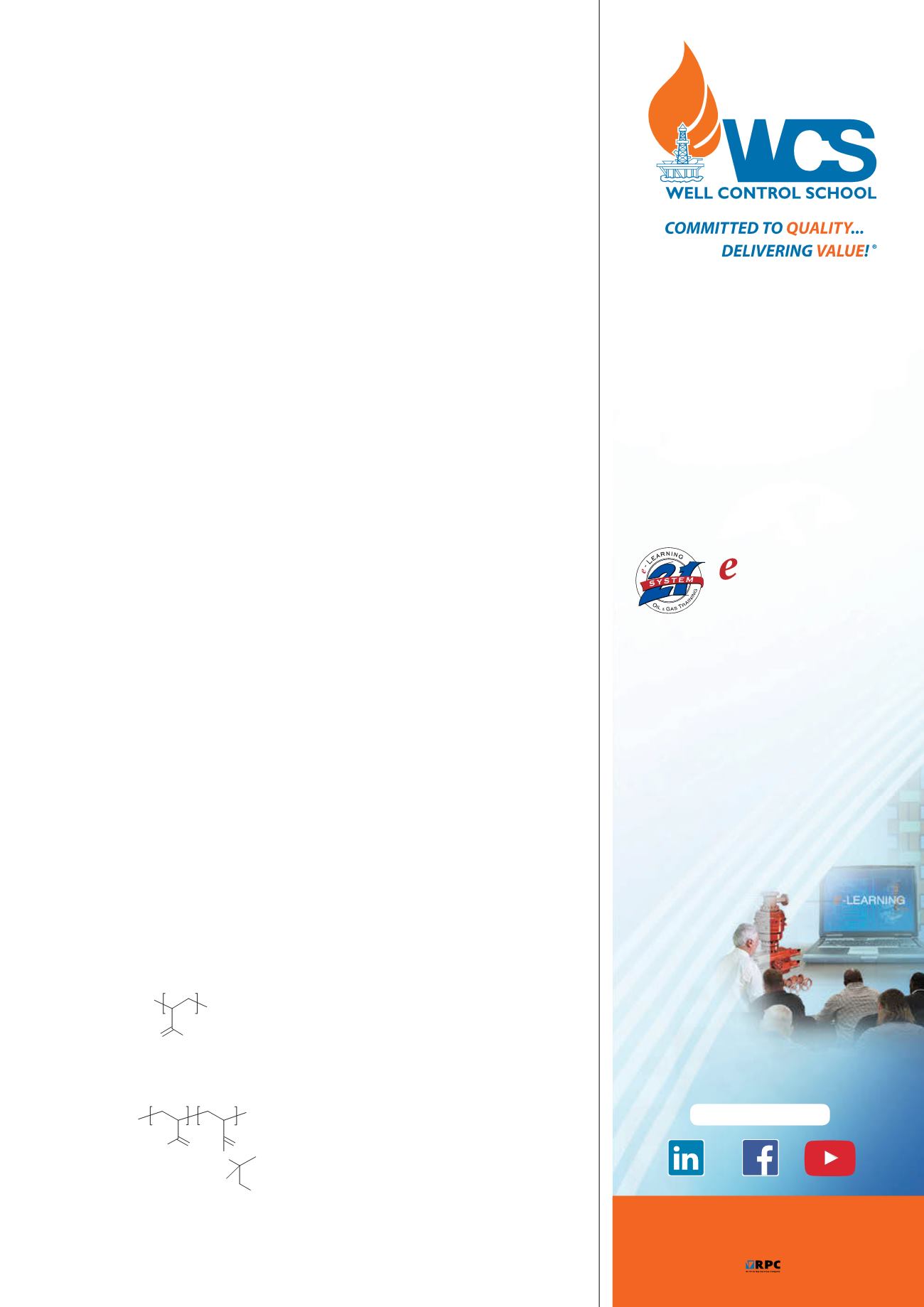
Polymeric silica dispersants, often low molecular weight acrylic co-polymers,
actively disperse silica scales and keep them in solution. Typical silica scale
dispersants consist of the following low molecular weight polymer structures:
A. Poly acrylic (4000 to 8000 Da).
istries were evaluated in a best-in-class, rapid screening technique to systematically
ent technologies in the market. From this test, one i able to evelop a detailed
of the structure-performance relationships of each c mpoun and ynergistic
Synergistic blends demonstrate a real performance boost by improving the delivery
f the dispersant to the specific place it needs to be most effective. LIBERATE and
silica scale inhibitor blends consist of surfactants, chelating agents, pH-modifiers, and
ersants.
unds like an overly complex cocktail of chemistries; however, they are all present for a
n:
tants are often used to clean up scale surfaces that are covered in oil and grease. In
n, the surfactant is used to transform the oil-wet nature of the scale to water wet and
the dispersant to attack the morphology more effectively.
ting agents are used to remediate contaminant scales from the silica surface areas.
difiers are required to adjust to the right pH range and allow for maximum silica inhibition
veness.
eric silica dispersants, often low molecular weight acrylic co-polymers, activ ly disperse
cales and keep them in solution. Typical ilica scale dispersants consist of the following
olecular weight polymer structures:
ly acrylic acid (4,000 to 8,000 Da)
*
O OH
*
n
ly acrylic acid co- 2-acrylamido-2-methylpropan sulfonic acid (6,000 to 8,000 Da)
*
*
O
NH
O
SO
3
H
OH
n
n
ly acrylic acid co- 2-acrylamido-2-methylpropan sulfonic acid co- sulfonated styrene
,000 to 12,000 Da)
B. Poly acrylic acid co-2-acrylamido-2-methyproplan sulfonic acid (6000 to 8000 Da).
xisting chemistries were evaluated in a best-in-class, rapid screening technique to systematically
ppraise current technologies in the market. From this test, one is able to develop detailed
nderstanding of the structure-performance relationships f ach compound and synergistic
rmulations. Synergistic blends demonstrate real performance boo t by i proving the delivery
ch i m of the dispersant to the specific place it needs to be most effective. LIBERATE and
CALETREAT silica scale inhibitor blends consist of surfactants, chelating agents, pH-modifiers, and
olymeric dispersants.
his initially sounds like an overly complex cocktail of chemistries; however, they are all present for a
pecific function:
•
Surfactants are often used to clean up scale surfaces that are covered in oil and grease. In
addition, the surf ctant is used to transform the oil-wet nature of the scale to water wet and
allows the dispersant to attack the morphology more effectively.
•
Chelating agents are used to remediate contaminant scales from the silica surface areas.
•
pH modifiers are required to adjust to the right pH range and allow for maximum silica inhibition
effectiveness.
•
Polymeric silica dispersants, often low molecular weight acrylic co-polymers, actively disperse
silica scales and keep them in solution. Typical silica scale dispersants consist of the following
low molecular weight polymer structures:
a. Poly acrylic acid (4,000 to 8,000 Da)
*
O OH
*
n
b. Poly acrylic acid co- 2-acrylamido-2-methylpropan sulfonic acid (6,000 to 8,000 Da)
*
*
O
NH
O
SO
3
H
OH
n
n
c. Poly acrylic acid co- 2-acrylamido-2-methylpropan sulfonic acid co- sulfonated styrene
(8,000 to 12,000 Da)
+1.713.849.7400
TM
FOLLOW US
-
Learning
COURSES
INSTRUCTOR
-
Led
COURSES
Register today:
•
IADC WellSharp
™
Drilling/Workover
• IADC WellCAP
®
Workover/Well Servicing
• IWCF Rotary Drilling
• IADC WellSharp
™
Drilling Operations
• IADC WellCAP
®
Workover/Well Servicing
• IWCF Drilling level 2
• WCS Certified Drilling
• WCS Basic Rig Math


